NAEYC Accredited, 5-Star Preschool in Greenville, NC.
Contact Us To Schedule A Tour Call: (252) 756-8200
Adults play a key role in supporting toddler thinking skills by offering enriching, hands-on experiences that strengthen reasoning, creativity, and early problem-solving. During ages one to three, toddlers rapidly develop the cognitive abilities they need to understand how the world works and build important foundations for learning.
As a 5-star preschool, Children’s Campus of Greenville provides nurturing, hands-on learning environments that help toddlers thrive. To help families encourage toddler cognitive development at home, we’ve compiled some simple and effective ways families can practice critical thinking skills during everyday routines and play.
Open-ended play allows toddlers to experiment freely, make decisions, and discover outcomes without strict rules or expectations. This kind of play builds cognitive flexibility, strengthens early problem solving skills, and helps kids ages one to three develop new skills that support thinking throughout a child’s life.
When children explore freely, they often play independently and follow their own ideas—an important part of how kids learn to use critical thinking skills in everyday life.
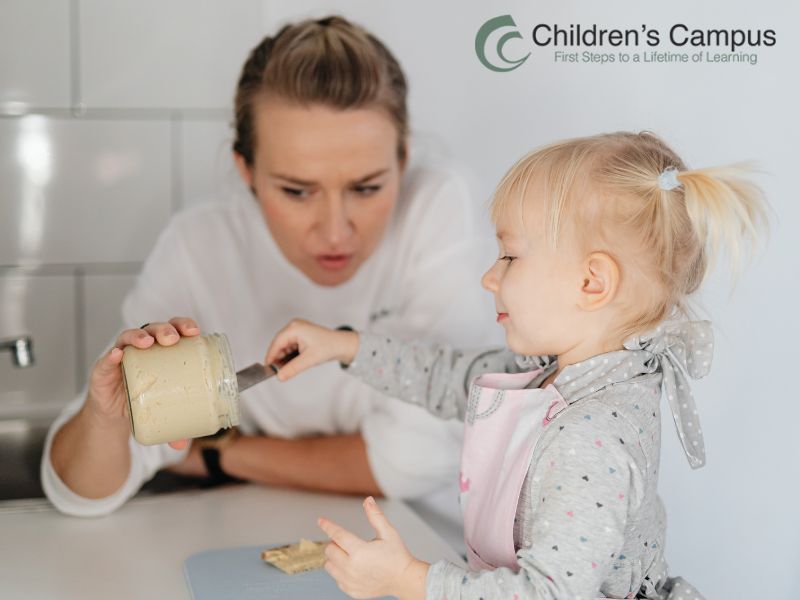
Talking through daily routines helps toddlers build language skills, understand sequences, and make meaningful connections between actions and outcomes. As adults describe what’s happening, toddlers gain a stronger sense of how objects and people interact in everyday life. Asking open ended questions and narrating steps supports attention, memory, and critical thinking.
These moments give parents valuable opportunities to teach important skills that children learn long before elementary school.
Sensory play supports thinking skills by helping toddlers develop attention, memory, and early observational thinking. When toddlers explore textures, sounds, and movement, they strengthen neural pathways and learn how things happen in the physical world. Sensory experiences also give toddlers opportunities to help your toddler predict outcomes and test ideas, supporting both cognitive growth and gross motor skills.
Whether running fingers through rice or watching glitter swirl in a bottle, sensory play gives toddlers new ideas and encourages curiosity in meaningful ways.

Sorting and matching strengthen early logic, memory, and visual processing—key components of all those skills associated with toddler cognitive development. These activities help toddlers compare attributes, categorize objects, and organize information more effectively.
As a child asks questions and tests different groupings, they strengthen their self control, attention, and understanding of relationships.
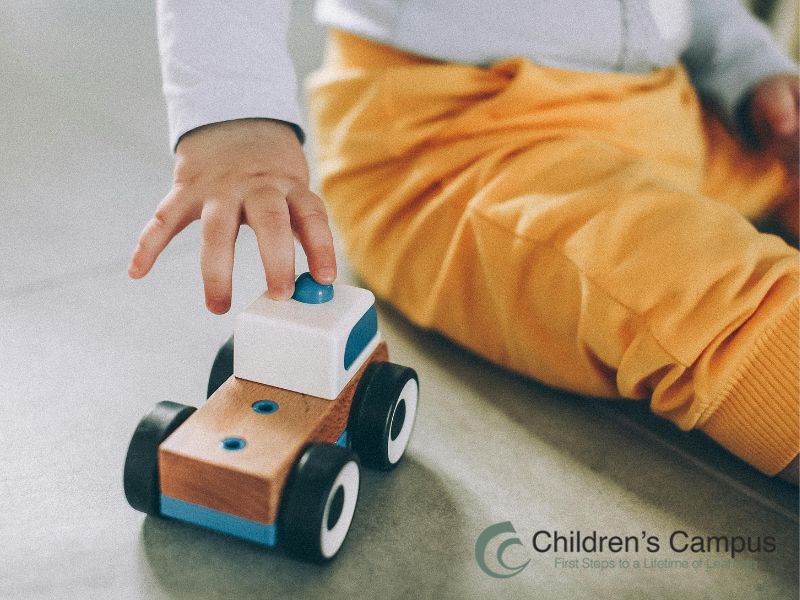
STEM (Science, Technology, Engineering, Mathematics) experiences help toddlers explore how the world works, observe patterns, and try simple activities that strengthen reasoning. Toddlers are naturally curious, and STEM play allows them to discover fun ideas through hands-on exploration. As toddlers test new ideas—pouring water, rolling objects, or comparing sizes—they develop important skills such as early prediction, observation, and the ability to problem solve.
These experiences fuel child’s imagination and spark curiosity that will help your two year old or three year old build foundational toddler thinking skills.
Outdoor play strengthens cognitive development by helping toddlers understand how the natural world behaves. Activities like climbing, running, and exploring materials support spatial reasoning, planning, and the behavior of different objects. Outdoor play also gives toddlers the chance to create new ideas as they compare textures, observe changes, and imagine how a stick might become a “rocket ship” or a leaf might float across water.
These experiences support all the things toddlers use in later problem-solving: observation, prediction, and experimentation.
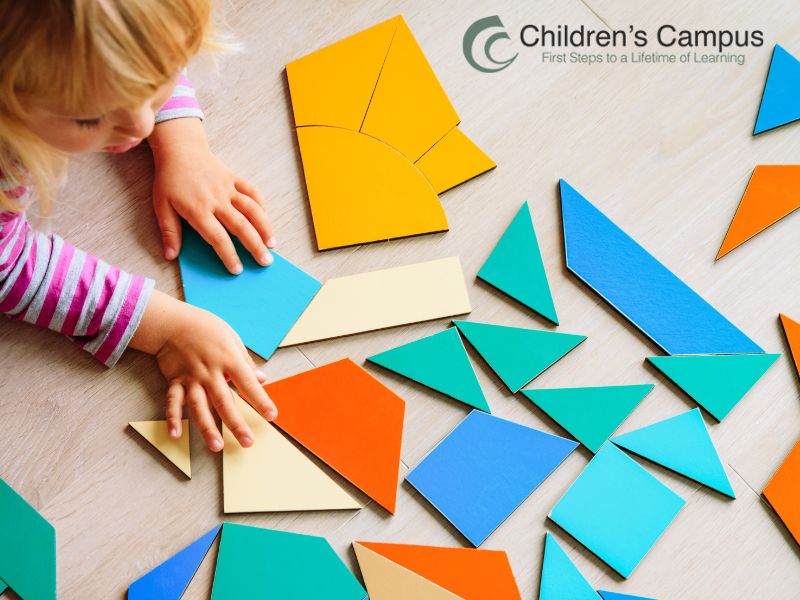
Puzzles and manipulatives support fine motor skills for preschoolers. This form of hands on learning can shape recognition and early critical thinking skills that toddlers need as they develop strategies to solve problems in creative ways. These materials help toddlers practice trial-and-error, adjust their approach, and strengthen their focus, all while exploring early geometry and shapes.
When most toddlers experiment with puzzles, they build confidence and independence by learning to navigate challenges without relying on a grown up to solve them—one of the ways they begin forming key thinking habits.

Music helps toddlers build memory, sequencing, and early prediction—important skills for long-term cognitive development. Singing simple songs, clapping patterns, and playing instruments help toddlers understand patterns, express ideas, and communicate through rhythm. Music also supports emotional regulation and self control, giving toddlers structured opportunities to practice listening, following directions, and copying patterns.
These early experiences with music and rhythm help toddlers build the foundational thinking skills they’ll continue to use as they grow.
Helping your child develop strong toddler thinking skills begins by being a source of support, building an engaging environment, and providing opportunities to explore.
At Children’s Campus of Greenville, our toddler classrooms offer hands-on learning experiences that nurture curiosity, independence, and early cognitive development. As a 5-star preschool, we provide enriching programs aligned with early childhood best practices and NAEYC-inspired standards, helping toddlers build thinking skills that support future success.
Contact us today to learn more, schedule a tour, or enroll your child in a program, by calling 252-756-8200 or filling out our contact form to get started.
"*" indicates required fields