NAEYC Accredited, 5-Star Preschool in Greenville, NC.
Contact Us To Schedule A Tour Call: (252) 756-8200At Children’s Campus of Greenville, we believe that the best way to prepare young learners for the future is to give them a strong foundation in problem-solving skills, creativity, and exploration. Our 5-star preschool follows a STEM curriculum, integrating science, technology, engineering, and mathematics into everyday activities. This gives children the chance to explore, ask questions, and discover new ideas.
By blending hands-on STEM lessons with guided instruction, we nurture natural curiosity and help toddlers develop observation skills, teamwork, and critical thinking that extend far beyond the preschool classroom.
When STEM learning is introduced at an early age, children begin to see learning as an exciting adventure. In our preschool and Pre-K classrooms, STEM concepts are woven into everyday play and activities. This approach strengthens early education while also giving students the confidence to explore the natural world with creativity and purpose.
By experiencing different types of STEM activities, whether building, experimenting, or problem-solving, children develop creativity, math skills, and a sense of how science, technology, and engineering practices connect to the world around them.

Science learning in preschool begins with curiosity—asking questions, testing ideas, and making discoveries. Through these activities, children practice early science skills, noticing patterns, asking “why,” and forming their own explanations:
In our preschool is not about screens—it’s about using tools to explore, create, and problem-solve. By thoughtfully incorporating these tools, children build comfort they’ll use in school while enhancing their creativity and problem-solving skills


Engineering in preschool focuses on problem-solving challenges and developing persistence through trial and error. Engineering lessons help children develop resilience and critical thinking as they learn to improve designs and try new approaches when something doesn’t work the first time:
Mathematics in preschool is hands-on and built into daily routines so children learn through play and real-world practice. By exploring math in fun and meaningful ways, students build confidence before kindergarten and understand that math is part of their everyday world:
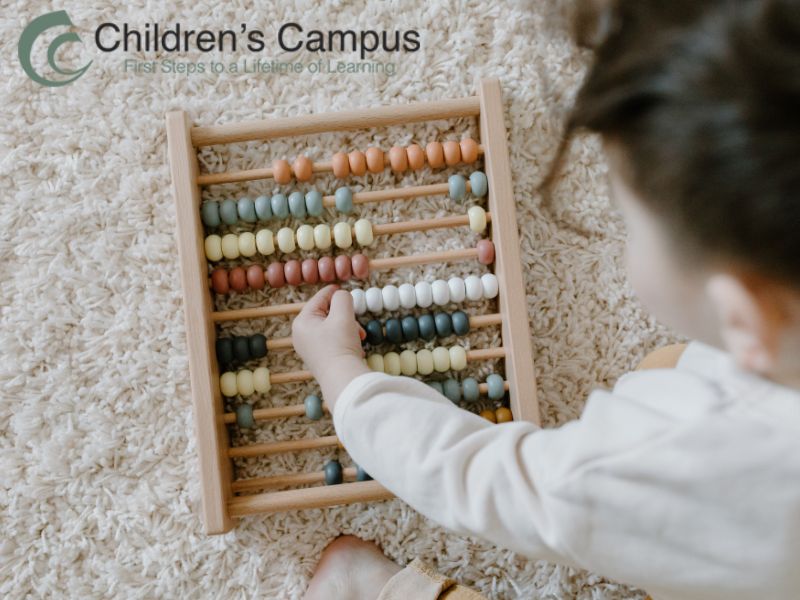
A preschool that follows a STEM curriculum goes beyond traditional academics to support whole-child development and prepare kids for lifelong success. When educators introduce STEM learning early, children gain both knowledge and confidence that shape how they view school and the world around them.
In addition to being a 5-star, NAEYC accredited preschool in Greenville, Children’s Campus follows a STEM curriculum that offers key benefits to toddlers, including:
The importance of introducing STEM at this stage is supported by research and the Next Generation Science Standards, which emphasize early exposure to science, technology, engineering, and mathematics. By having educators who know how to teach these concepts through age-appropriate play and lessons, children gain valuable skills while staying engaged and curious.
Through the natural progression of hands-on manipulation and observation, even infants can start to be introduced to the foundations of STEM-related play by being introduced to new colors and shapes that pique curiosity. However, the developmental stages of 2-year-olds and 3-year-olds makes the toddler years the perfect time to start building on those foundational skills through lessons that integrate observation, problem-solving, and early mathematics. This makes preschool the perfect opportunity to introduce STEM concepts.
Our preschool’s STEM curriculum is integrated with art, music, and storytelling, so children develop creativity while also practicing teamwork and communication.
By building critical thinking, problem-solving skills, and early familiarity with science and math, STEM prepares children for success in kindergarten and beyond.
If you’re looking for a preschool program that combines nurturing teachers, engaging classrooms, and a STEM curriculum designed for early childhood development, Children’s Campus of Greenville is ready to welcome your family.
Schedule a tour today to see our preschool STEM curriculum in action. Call us at (252) 756-8200 or fill out the contact form below to learn more—we look forward to helping your child explore, create, and grow.
"*" indicates required fields