NAEYC Accredited, 5-Star Preschool in Greenville, NC.
Contact Us To Schedule A Tour Call: (252) 756-8200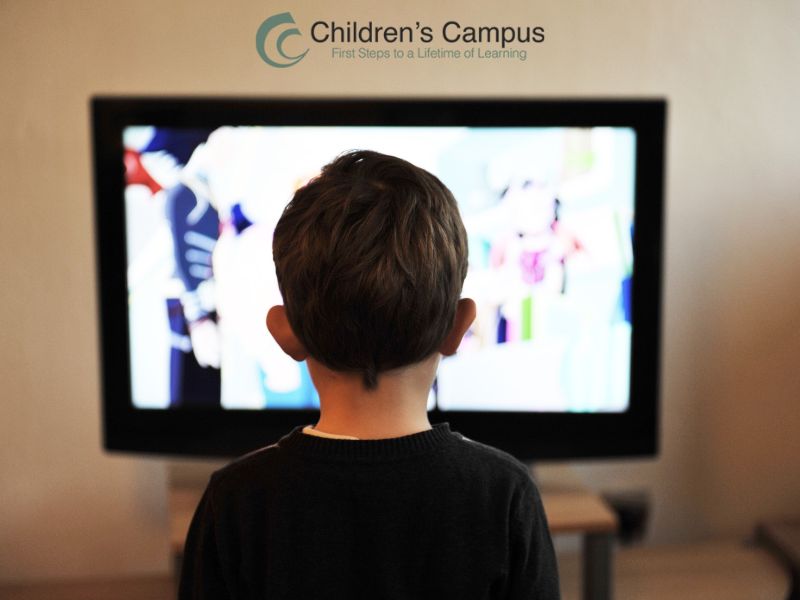
Parents today are raising children in a world filled with glowing screens. Phones at the grocery store, tablets in the car, televisions in the living room. Many families wonder how this technology shapes a toddler’s developing brain. Research over the last decade has moved beyond simple “screens are bad” messages and toward a more thoughtful understanding of how, when, and why digital media affects early learning.
At Children’s Campus of Greenville, we believe the best way for parents to decide what works best for their household and child is to remain informed on current research. Join our 5-star preschool as we explore what recent studies have shown regarding toddler screen time so that you can make choices that are in the best interest of your child’s development.
For years, parents were told that screens were a one-way road to attention problems and delayed language development. Many families still carry that worry; they wonder if a short video while dinner cooks or a cartoon on a rainy morning has already done harm. As early educators, we hear those concerns often, and the good news is that recent research offers a more balanced view than the old message of “no screens, ever.”
Much of the early alarm grew out of studies focused on background television and adult-oriented programming. In those years, toddlers were often exposed to fast, noisy content with little conversation or guidance. A 2024 review from Children and Screens describes how those early conditions shaped public opinion and why newer studies, built around modern family habits, offer a more accurate understanding.
Instead of treating all screen time the same, scientists now ask:
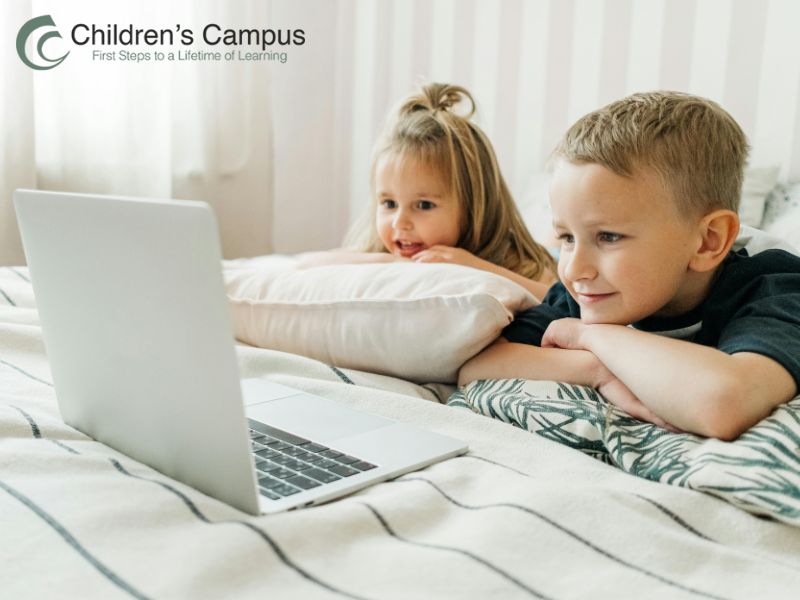
A 2023 analysis in the National Library of Medicine found that developmental effects mostly depend on what surrounds the screen. When digital media replaces talking, reading, and active play, risks increase. When paired with caregiver interactions such as questions, explanations, shared experiences, or laughter, outcomes look very different.
This mirrors what we see in many of our 2 year old and 3 year old classrooms during story time. Children who are used to adults pausing to ask, “What do you think happens next?” tend to participate more and hold attention longer.
2024 evidence presented by CHOC Children’s Health shows that background television can lower the amount of parent-child conversation in a room. Even when a toddler is not watching, speech and imaginative play often decline, limiting the everyday language that builds vocabulary. Language and speech development grow fastest when toddlers hear real voices responding to their ideas, which is something a screen cannot replace.
Research in Early Childhood Research Quarterly reports that slow-paced, educational programs with pauses and opportunities for response lead to better comprehension than rapid entertainment videos. Learning improves further when an adult talks with the child while viewing instead of leaving the toddler alone with the device. When technology is used, it works best like a picture book; it is something to talk about together, not something that talks at the child.
A family studies review from Brigham Young University emphasizes that toddlers learn through movement, touch, and relationships. A child’s brain development slows when screens push out and completely replace those valuable experiences. However, risks about slowed cognitive development drop significantly when media access is balanced with outdoor play, hands-on exploration, and shared story time.
The goal is not to eliminate screens, but to keep them in proportion to the experiences that support the development of young brains, such as exploring in the sandbox, building with blocks, chatting with friends, and engaging in interactive storytelling.
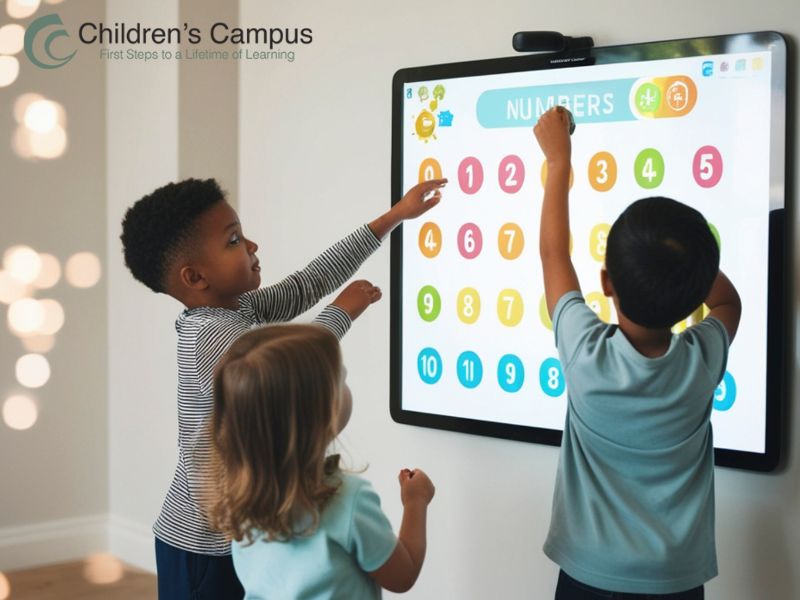
Every household looks different, but these research-based habits help screens fit into a healthy routine rather than replace it. Families do not need perfect rules; they just need steady rhythms that keep relationships, play, and conversation at the center of the day to support toddlers’ thinking skills.
Meals, car rides, and bedtime are prime opportunities for connection with kids. Those everyday moments are when toddlers ask questions, practice new words, and learn how conversation flows. Keeping devices away from those windows preserves some of the richest learning minutes a family has.
Shows with clear storylines and gentle pacing are easier for young minds to follow. Fast scene changes and loud effects can leave toddlers overstimulated and restless, while calm programs give them time to notice details and make sense of what they see.
Even a few minutes of shared conversation can change how a child interprets what they see. When an adult pauses to ask, “What color is the truck?” or “How do you think she feels?” the screen becomes a starting point for real thinking. Co-viewing turns a passive moment into an interactive one.
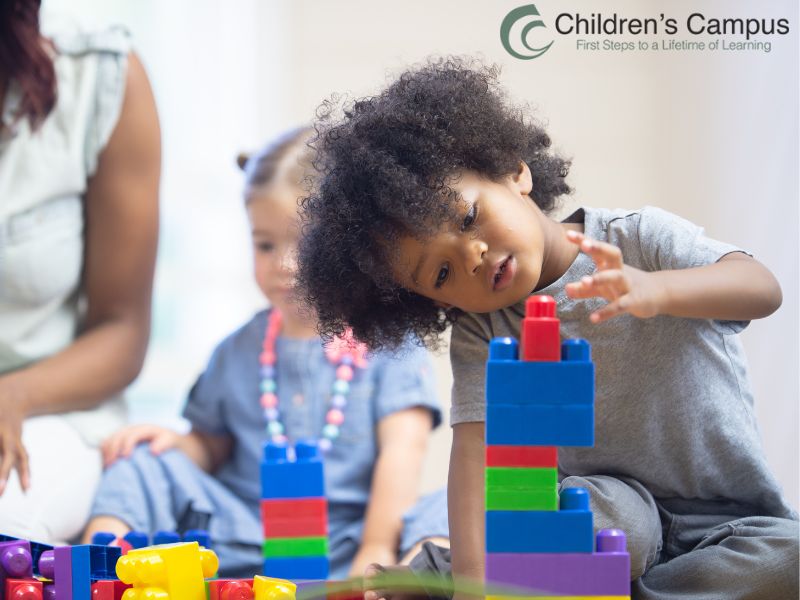
Blocks, puzzles, dolls, and outdoor time give a child’s brain the material it needs to develop. Designating one or two spaces in the home where screens never enter helps toddlers settle into deeper, more imaginative play. Many parents will find that those device-free corners often become the places children return to on their own.
Toddlers notice when adults scroll through phones during family time. They learn what matters by observing how parents use their own devices, not by relying on rules alone. Simple choices like placing the phone face down at dinner or leaving it in another room send a powerful message about priorities and influence how a child interacts with media devices in the future.
There isn’t one perfect number, but most experts suggest keeping toddler screen time brief and intentional rather than automatic. Short, planned moments work better than long stretches. The healthiest routines treat screens as an occasional tool, not a default way to fill time.
Screens alone are weak teachers of language. Words learned through a device tend to stick only when an adult repeats them and connects them to real-life contexts. Conversation beats cartoons almost every time.

It can be. Research shows that background television reduces the amount of talking and focused play in a room. Toddlers glance at it repeatedly, breaking concentration.
Video calls with grandparents or loved ones are closer to real interaction than prerecorded shows. The back-and-forth conversation, facial expressions, and turn-taking support social and language skills in ways passive viewing cannot.
Apps can introduce letters, numbers, or songs, but they cannot replace hands-on exploration with real materials and peers. Toddlers learn problem-solving by stacking blocks that fall, negotiating over toys, and moving their bodies through space. Screens can supplement learning, not substitute for it.
Irritability when a device is removed, shorter attention span with toys, frequent boredom without a screen, or trouble settling at bedtime are common indicators. These signals usually improve when families rebuild routines around play, reading, and outdoor time.
At Children’s Campus of Greenville, we believe toddlers learn best through real voices, hands-on experiences, and caring relationships, guided by NAEYC-inspired standards for high-quality early education. Our classrooms are designed to keep curiosity moving, with outdoor play, music, stories, and hands-on discovery shaping every part of the day.
Families are welcome to visit, meet our teachers, and see how a balanced, screen-light environment helps children grow in confidence and kindness. Schedule a tour or contact us today to learn more. Call [phone] or fill out our contact form to get started.
"*" indicates required fields